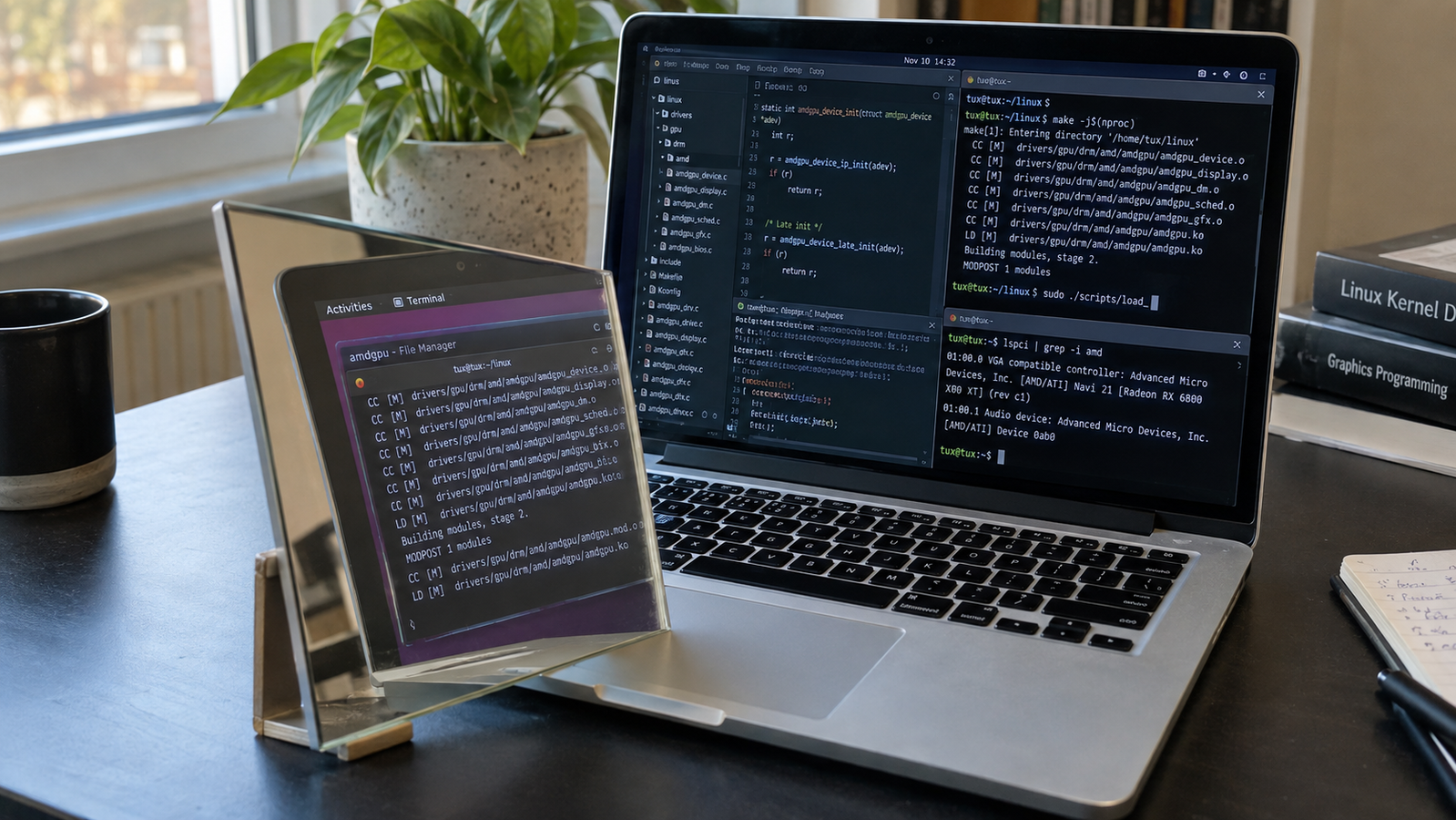
È un’operazione che fa dire ‘Ma è stufo di noi?’ al reparto hardware, ma l’esperimento di Schroeder e della community Omarchy Linux è una dimostrazione che spacca. L’obiettivo? Far scrivere a un agente di Intelligenza Artificiale i driver per la GPU AMD su un MacBook datato. E come fa a vederci lavorare? Bene, la soluzione è un misto di fantascienza e trucco ottico: viene utilizzata una webcam che, invece di inquadrare lo schermo direttamente, è puntata su uno specchio. Lo specchio funge da specchio magico, reindirizzando l’immagine del display per dare all’AI un feedback visivo del codice che sta scrivendo in tempo reale. In pratica, il MacBook svolge un doppio ruolo: è il cervello che fa i calcoli e, contemporaneamente, l’oggetto che viene ‘osservato’ per verificare gli effetti dell’AI. Questa genialata dimostra come gli agenti AI possano andare ben oltre il semplice testo, intervenendo nella manutenzione e perfino nell’interazione con l’hardware. Omarchy Linux si posiziona qui come la distribuzione ideale per l’era degli agenti, promettendo supporto fino a vecchi best friend come un ThinkPad del 2011, e garantendo compatibilità che spazia dai vecchi Mac Intel ai moderni Apple Silicon. L’episodio ha fatto ridere persino Tim Sweeney di Epic Games, che ha scambiato battute richiamando l’iconico HAL 9000. In ogni caso, è un promemoria che il futuro dello sviluppo software non è solo codice, ma un ecosistema complesso di osservazione, manutenzione e adattabilità, anche per i gioielli della Apple Silicon.
🇬🇧 Summary in English
Brace yourself, because this experiment makes you question if AI is tired of us. But the endeavor by Schroeder and the Omarchy Linux community is a killer demonstration. The mission? Getting an AI agent to write drivers for AMD GPUs on a vintage MacBook. And how does it see the action? Well, the solution is a mix of sci-fi gadgetry and optical illusion: they’re using a webcam aimed not directly at the screen, but at a mirror. The mirror acts as a magical conduit, redirecting the display image to provide the AI with visual feedback on the code it’s writing in real-time. Basically, the MacBook has a double life: it’s the brain doing the calculations, and simultaneously the object being ‘watched’ to verify the effects of the AI’s interventions. This incredible feat shows that AI agents can go far beyond simple text generation, entering the realm of hardware maintenance and interaction. Omarchy Linux positions itself as the ideal distribution for the age of agents, promising support even for old pals like a 2011 ThinkPad, and ensuring compatibility ranging from old Intel Macs to modern Apple Silicon. The whole thing even got Tim Sweeney, head of Epic Games, to crack jokes referencing HAL 9000. Either way, it’s a powerful reminder that the future of software development isn’t just about code; it’s a complex ecosystem of observation, maintenance, and adaptability, even for beloved Apple Silicon devices.
Leggi l’articolo originale su Tom’s Hardware IT →
Fonte: Tom’s Hardware IT | Argomento: Hardware & Chip
#tecnologia #innovazione #technews