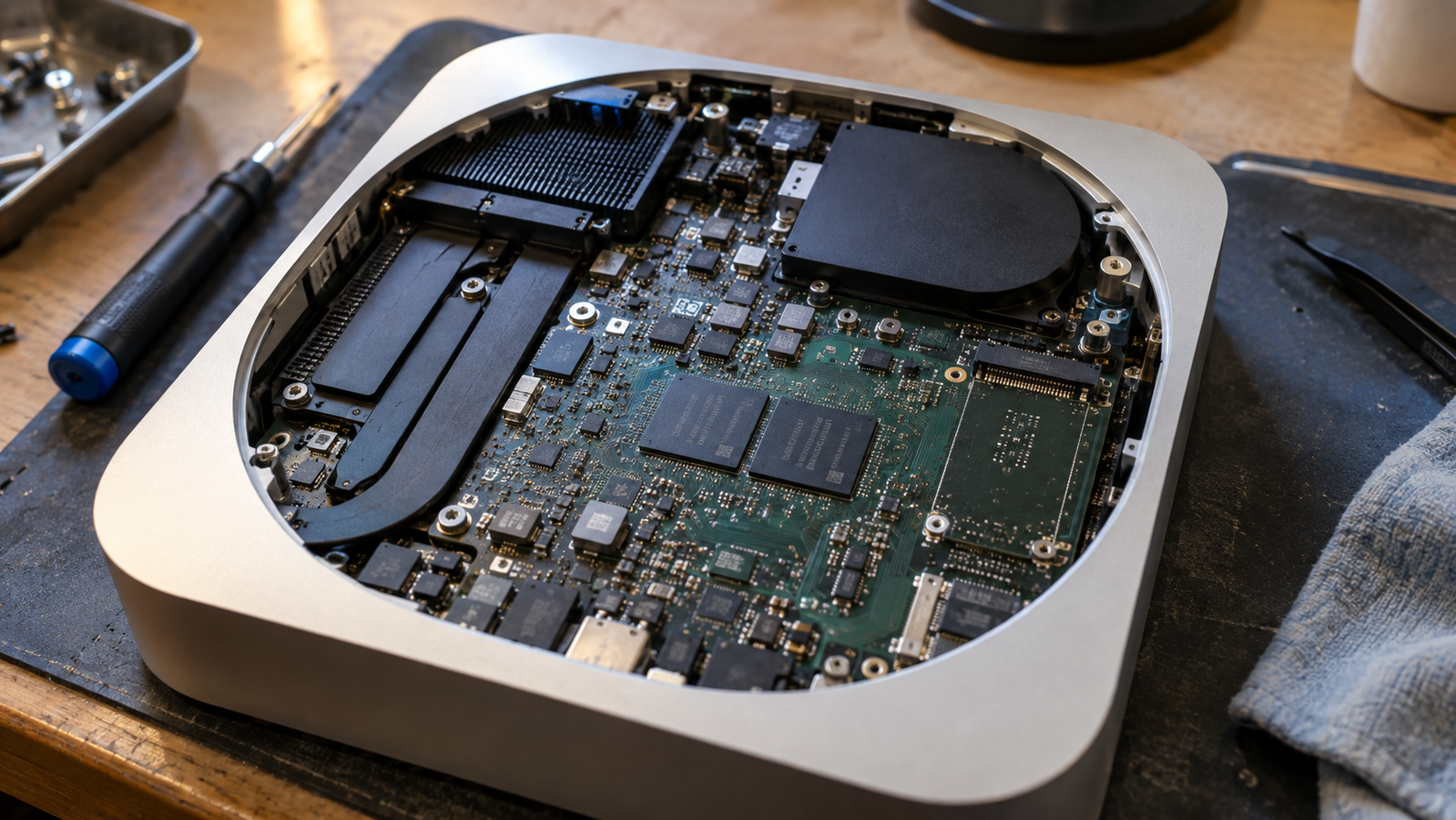
Apple ha fatto un cambio di rotta radicale per i nuovi Mac mini M6 e M5 Pro, e non è un giochino. A partire da ora, la memoria SSD non è più un modulo sostituibile. Apple ha deciso di saldare i chip direttamente sulla scheda madre, rendendo la configurazione di storage acquistata un dato definitivo, per tutta la vita del computer. Questa mossa è un cambio netto rispetto ai modelli precedenti, come l’M4, che lasciavano ancora spazio a moduli rimovibili, sebbene la sostituzione non fosse supportata ufficialmente. Gli utenti che in passato sognavano di espandere lo spazio con un’unità esterna o con l’intervento di terze parti, devono ora accettare la capacità di base al momento dell’acquisto. Questa transizione allinea i Mac mini con altri prodotti Apple di fascia alta, come Mac Studio e MacBook Pro, che ormai adottano la tecnologia di memoria saldata. Ma la storia non finisce qui: Apple ha anche giocato con le specifiche di storage. Si nota una differenza interessante tra le configurazioni, ad esempio, tra la versione base da 256 GB che usa un singolo chip NAND, e i tagli superiori che distribuiscono i dati su più chip. Questa architettura avanzata non solo permette prestazioni maggiori, ma influenza direttamente anche la velocità. Per esempio, mentre la versione da 256 GB raggiunge circa 3.000 MB/s, il passaggio a 512 GB spinge le prestazioni a circa 6.500 MB/s – un vero salto di qualità, pari al doppio! In sintesi, per i nuovi possessori di Mac mini, scegliere attentamente la capacità non significa solo decidere lo spazio futuro, ma anche blindarsi su un livello di velocità e performance che sarà lo standard di riferimento per anni a venire. Meglio pensare bene, perché il momento di scegliere è adesso.
🇬🇧 Summary in English
Apple has pulled a somewhat surprising tech stunt with the new Mac mini M6 and M5 Pro: they’ve decided to solder the SSD chips right onto the main board. What does this mean for us? It means the storage unit is no longer an upgradable module. The capacity you buy is the capacity you’re stuck with, forever. This is a major pivot compared to previous generations, like the M4, which at least offered (if kinda tricky) the possibility of removable modules, even if official upgrades were a bit of a myth. It’s the kind of change that aligns the Mac mini with the big boys, like the Mac Studio and MacBook Pro—all opting for soldered memory. But wait, there’s more. Apple hasn’t just done away with upgrades; they’ve also thrown down a gauntlet regarding performance. There’s a clear architectural difference between the storage tiers. The base 256 GB model uses a single NAND chip, while the higher-end versions distribute the data across multiple chips. This setup doesn’t just promise more space; it significantly boosts speed. For instance, the 256 GB version hits about 3,000 MB/s, but bumping up to 512 GB shoots the speed up to roughly 6,500 MB/s—that’s literally more than double! Bottom line? Choosing the initial storage capacity for these new minis is no longer just about estimating future space needs; it’s about securing a locked-in performance level for years to come. Future-proofing means being very deliberate at the point of purchase. Looks like Apple wants us making serious decisions right from the start.
Leggi l’articolo originale su Tom’s Hardware IT →
Fonte: Tom’s Hardware IT | Argomento: Tech News
#tecnologia #innovazione #technews