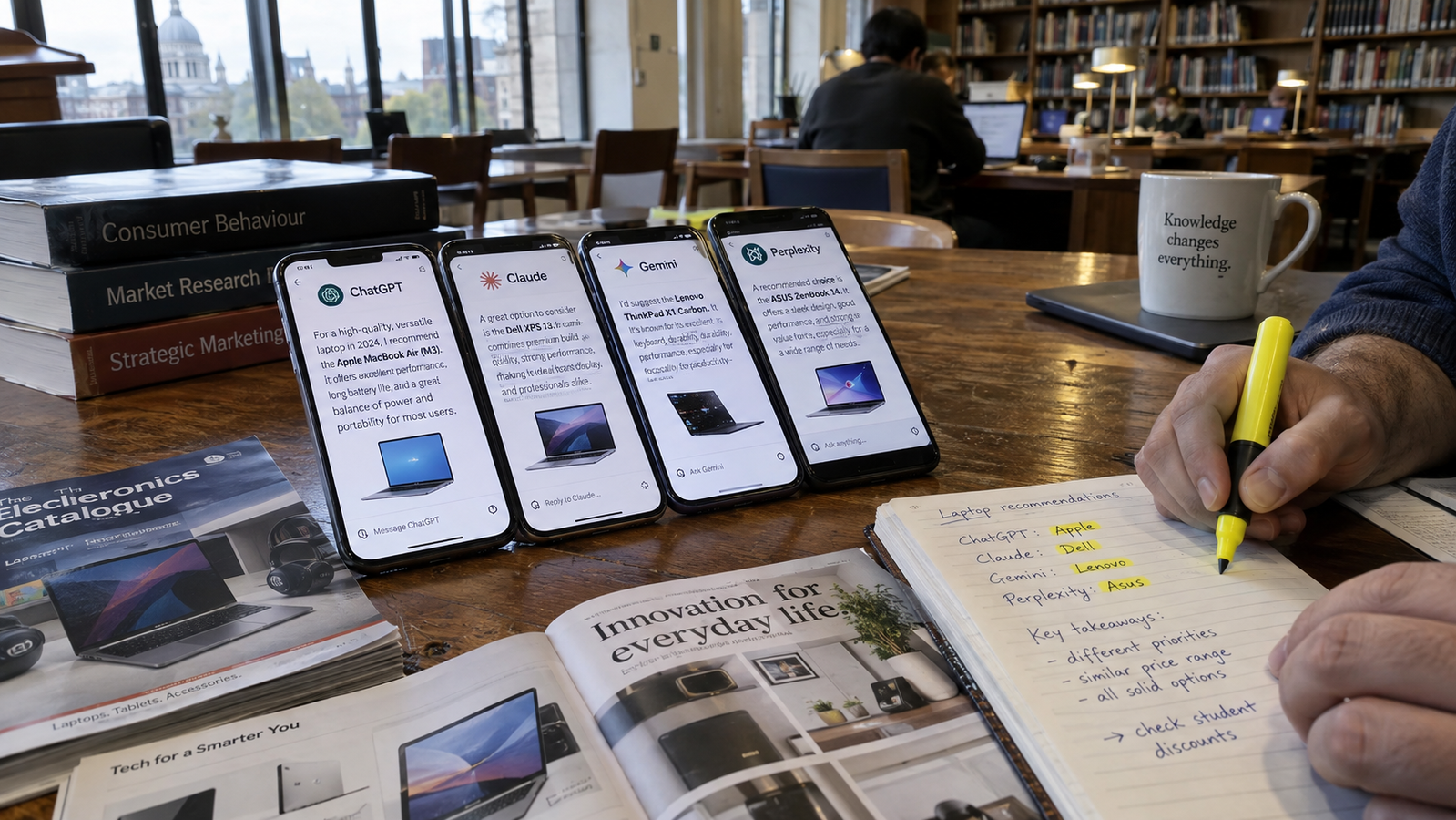
Il panorama delle raccomandazioni di prodotti generate dall’Intelligenza Artificiale sembra essere un campo minato di incertezze, secondo quanto rivela una recente ricerca. Il consulente londinese Frank Vitetta ha voluto mettere alla prova i grandi assistenti del momento – ChatGPT, Claude, Gemini e Perplexity – sottoponendoli a un set di 749 domande identiche riguardanti la selezione di prodotti. E il risultato è sorprendente: le risposte sono un disastro di disaccordo. L’analisi dimostra che, anche mantenendo immutata la richiesta dell’utente, la piattaforma AI utilizzata determina in modo netto quali marchi verranno citati (o, peggio, omessi). La discrepanza non è solo una questione di posizione in un elenco; un brand può comparire in primo piano su un assistente e sparire completamente da un altro, pur avendo ricevuto esattamente lo stesso quesito. In termini statistici, quasi un terzo delle volte i sistemi non riescono ad accordarsi sulla sola presenza di un marchio monitorato. Questo fenomeno suggerisce che la scelta del ‘cervello’ con cui si parla per fare shopping non è un dettaglio da sottovalutare. Per chi usa questi assistenti per la ricerca commerciale, significa dover accettare che l’esperienza di scoperta sia intrinsecamente variabile. Vitetta sottolinea che, se da un lato il crescente utilizzo di questi strumenti spinge le aziende a investire in ‘Generative Engine Optimisation’, dall’altro il messaggio è chiaro: la visibilità di un brand non è più determinata dal prodotto, ma dall’architettura del modello AI interrogato. In sostanza, se il marketing vuole sapere come posizionarsi in questo ecosistema, deve considerare che ogni assistente conversazionale è un filtro che ridefinisce la realtà commerciale, e l’utente è destinato a trovarsi a navigare in un multiverso di raccomandazioni apparentemente scientifiche, ma profondamente dipendenti dal sistema operativo di fondo.
🇬🇧 Summary in English
The digital shopping experience, it turns out, is anything but objective. A recent deep dive into large language models reveals that the big AI assistants—ChatGPT, Claude, Gemini, and Perplexity—don’t actually agree on product recommendations, even when asked the exact same question. A London consultant, Frank Vitetta, tested these models using 749 identical queries focused on product selection, and the results were a statistical masterpiece of disagreement. The key takeaway is simple, if jarring: the platform you choose to chat with dictates the brands you see. It’s not enough for the AI to simply suggest a product; it’s the sheer presence, or absence, of a brand in the response that varies wildly. At nearly a third of the times, the systems couldn’t agree on whether a monitored brand should be mentioned or left out. This means that the choice of AI engine isn’t just a preference; it fundamentally alters the product discovery journey. For consumers doing their homework, it suggests that what they see as the ‘best’ option is deeply dependent on which model they happen to be talking to at that moment. While companies are scrambling to adapt by focusing on ‘Generative Engine Optimisation,’ the report serves as a sharp warning: brand visibility has become a function of the AI’s internal wiring, not just the market’s reality. Essentially, the era of universal, unbiased AI advice might be over. Marketers must now acknowledge that every chat assistant is acting as a highly selective filter, reshaping commercial reality and forcing a recalculation of brand strategy in a delightfully chaotic, yet commercially charged, environment.
Leggi l’articolo originale su Tom’s Hardware IT →
Fonte: Tom’s Hardware IT | Argomento: Intelligenza Artificiale
#tecnologia #innovazione #technews