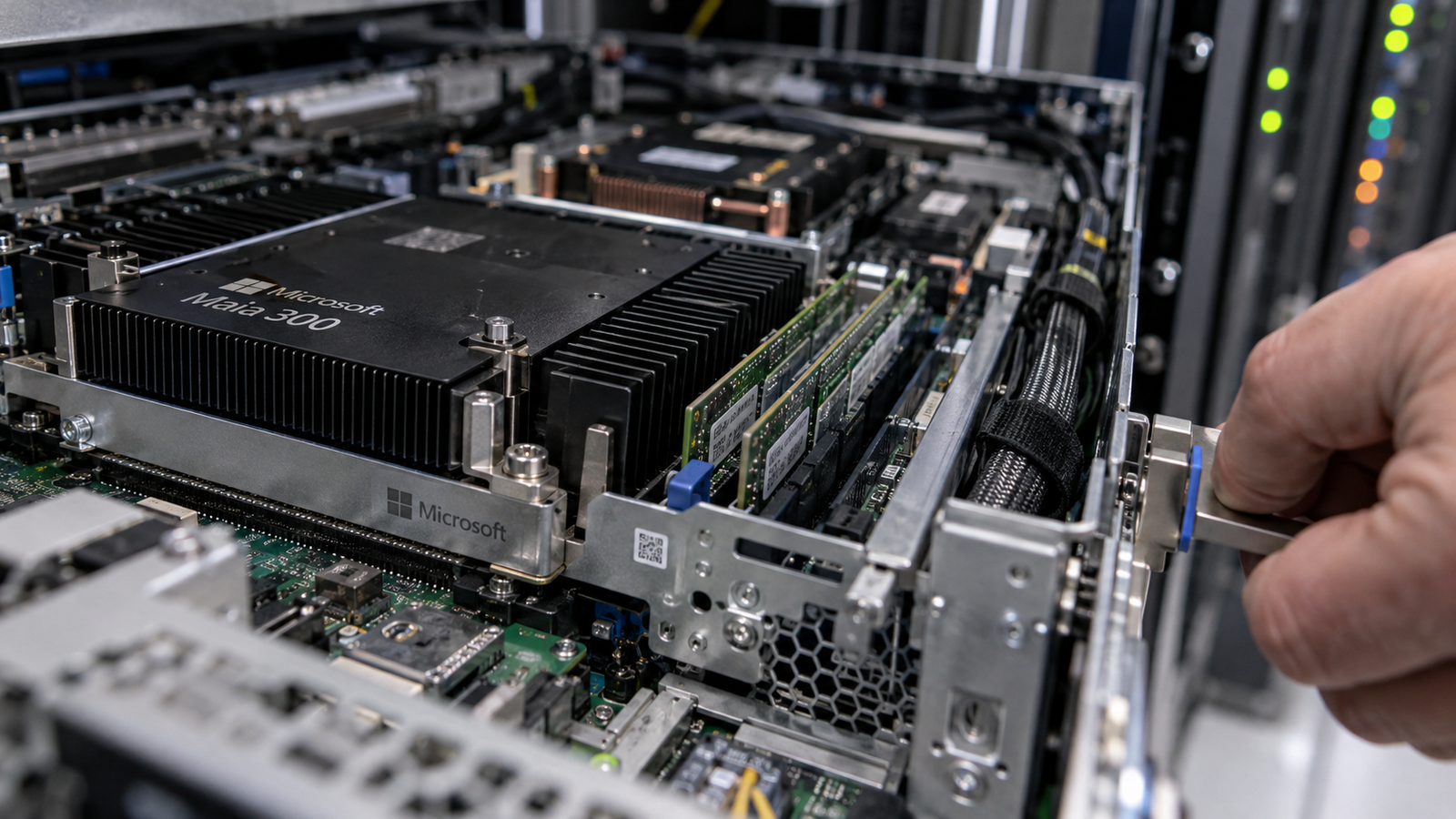
Sembra che Microsoft abbia trovato l’asso nella manica, o almeno un chip incredibilmente ambizioso. Con il lancio di Maia 300, l’acceleratore proprietario di terza generazione, Redmond non sta solo aggiornando il suo hardware: sta dichiarando apertamente la sua intenzione di ridefinire il paesaggio dell’AI cloud, riducendo drasticamente la dipendenza dalle costose GPU di NVIDIA. L’obiettivo primario di Maia è dominare il mercato dell’inferenza AI, ovvero la fase cruciale in cui i modelli addestrati generano risposte concrete. La sfida non è tanto sulle singole performance, quanto sull’efficienza energetica. Microsoft scommette sul fatto che i suoi chip interni offriranno un balzo di qualità in termini di token processati per megawatt di energia. Con un incremento che promette fino a sette volte la capacità di elaborazione dei token a livello di rack rispetto al predecessore, Maia 200, l’azienda puntava su metriche ultra-concrete per convincere il mercato. Questa potenza è sostenuta da una moderna architettura a ‘chiplet’, costruita su un processo N2P di TSMC, che permette di separare e ottimizzare ogni funzione – calcolo, memoria, I/O – utilizzando la tecnologia più adatta per ogni compito. Se il Maia 200 è già operativo in servizi come Copilot, il Maia 300 mira a gestire i carichi più complessi: conversazioni veloci e reattive, e agenti autonomi che eseguono sequenze operative prolungate. Il messaggio è chiaro: per avere un controllo totale sullo stack tecnologico, dal modello al silicio, bisogna produrlo da sé, specialmente quando si cerca di competere con i giganti dell’IA come Google o OpenAI.
🇬🇧 Summary in English
It seems Microsoft has found the golden ticket, or at least an incredibly ambitious chip. With the introduction of Maia 300, the third-generation proprietary accelerator, Redmond isn’t just refreshing its hardware; it’s making a clear statement about redefining the cloud AI landscape by drastically reducing reliance on expensive NVIDIA GPUs. The primary goal of Maia is to dominate the AI inference market—the crucial phase where trained models generate usable answers. NVIDIA is getting a run for its money. The key battleground isn’t just raw performance, but efficiency. Microsoft is banking on its internal chips achieving a massive jump in energy efficiency metrics (tokens per megawatt). Promising up to seven times the processing capacity per rack compared to its predecessor, Maia 200, the company is presenting hard metrics to prove its architectural advantage. This power boost is underpinned by a modern ‘chiplet’ architecture, built on TSMC’s N2P process. This design allows Microsoft to isolate and optimize every component—compute, memory, I/O—using the best technology for each job. While the previous Maia 200 is already handling tasks for products like Copilot, the Maia 300 is built for the toughest workloads: maintaining lightning-fast response in conversations and supporting long, multi-step autonomous agent operations. The message is crystal clear: controlling the entire tech stack, from the foundational model all the way down to the silicon, is mandatory for any major AI player trying to compete with tech behemoths like Google or OpenAI.
Leggi l’articolo originale su Tom’s Hardware IT →
Fonte: Tom’s Hardware IT | Argomento: Cloud & Infrastruttura
#tecnologia #innovazione #technews