🇮🇹 Sintesi in Italiano
Sembra che l’Intelligenza Artificiale stia per rivoluzionare il modo in cui lavoriamo, ma un gruppo di leader tech — provenienti da LinkedIn, Walmart e Zendesk — ha appena fatto crollare la facciata del progresso. Hanno capito una cosa fondamentale a VB Transform 2026: i veri colli di bottiglia non sono i modelli linguistici avanzati (i ‘modelli’ stessi), ma l’infrastruttura aziendale che li ospita. Insomma, se vuoi far ballare un agente AI ad alta velocità, devi prima smantellare i sistemi costruiti per ‘l’uomo’. Ogni azienda ha trovato il suo muro di contrasto. A LinkedIn, la banda non era solo il ‘model’, ma addirittura Kubernetes: passare da provisioning su richiesta a pool pre-provisionati è stato l’aggiornamento necessario affinché gli agenti sembrassero veloci quanto dovrebbero. Un altro nodito è emerso quando gli agenti hanno iniziato ad auto-orchestrarsi, rivelando che persino i sistemi sofisticati di valutazione possono fallire in modi strutturali. La soluzione? Andare sul sicuro: script deterministici per la maggior parte del lavoro e usare l’LLM solo dove ‘pensare’ è strettamente necessario. Walmart, d’altra parte, ha riscontrato un problema forse più paradossale. L’eccesso di successo! I dipendenti hanno accolto il sistema con entusiasmo quasi virale, dando vita a ‘sviluppatori cittadini’ che creavano agenti ovunque senza coordinamento. Il risultato? Un disastro di duplicazioni operative. La cura non è stato mettere i puntini sui ‘dischi’, ma costruire una vera governance per identificare gli agenti migliori e portarli in produzione senza far blocco il processo ingegneristico. Zendesk, infine, ha dovuto confrontarsi con un oceano di dati—20 miliardi di conversazioni! L’istinto naturale è caricarli tutti su un LLM gigantesco. Ma, come dimostra l’esperienza, questo approccio non funziona. La vera chiave è investire nelle *data pipeline* sottostanti: fare dell’architettura dati il cuore pulsante del sistema. In sintesi? Per far arrivare gli agenti AI alla piena potenza, le grandi imprese devono diventare ingegneri delle loro infrastrutture e dei propri dati, un salto di complessità decisamente più grande rispetto a quello che si aspettavano.
🇬🇧 Summary in English
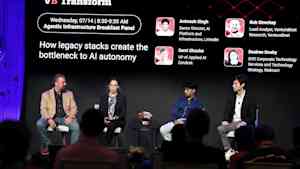
Turns out that while the fuss is often about the latest Large Language Models, the real brakes slowing down sophisticated AI agents aren’t the models themselves; they’re the outdated infrastructure they run on. That was the punchline shared by three major corporate players—LinkedIn, Walmart, and Zendesk—at VB Transform 2026. The consensus is clear: if you want a genuinely speedy agent, you first have to rebuild the technological systems designed for human workflows. Getting agents from a successful pilot project into full-scale enterprise production required massive engineering overhauls that had nothing to do with tweaking prompts or choosing a better LLM. Each company faced its own unique architectural headache. At LinkedIn, the initial speed bump wasn’t even the AI model, but Kubernetes itself; simply updating container provisioning from an ‘on-demand’ basis to pre-provisioned pools was a necessary fix for real-time performance. A deeper structural flaw emerged when agents started controlling their own logic: the problem couldn’t be solved by better reasoning models alone. The solution required scripting most of the workflow deterministically, limiting LLMs only to actual points of needed judgment. Walmart encountered a delightful mess created by success. Their internal ‘citizen developers’ were so keen on innovation that they started deploying dozens of overlapping, uncoordinated agents—a beautiful problem! To fix it, Walmart didn’t restrict access; instead, they built robust governance layers to manage duplication and elevate the best-performing agent versions into production without jamming up their core engineering teams. Meanwhile, Zendesk hit a data wall. With an immense repository of 20 billion customer conversations, the temptation is to just hand it all to a large context window LLM. But experience proved that impossible. The real fix? Deep investment in robust underlying data pipelines and data infrastructure—making the data architecture the star instead of the model itself. Bottom line: for enterprise AI agents to reach their potential, companies aren’t just buying smarter models; they are fundamentally reimagining and reconstructing the digital highways and data plumbing that make the intelligence actually move.
Leggi l’articolo originale su VentureBeat →
Fonte: VentureBeat | Argomento: Tech News
#tecnologia #innovazione #technews